Quick answer: Top brands treat UX/UI as a revenue system, not decoration. They remove friction at checkout, cut page load time, personalize what users see, and design mobile-first. The numbers back it. Forrester reports up to $100 returned for every $1 spent on UX, a 9,900% ROI (Forrester, via Hallam, 2025). McKinsey finds design-led companies grow revenue 32% faster (McKinsey). Baymard shows checkout fixes alone recover 35.26% more conversions (Baymard, 2025).
TL;DR
- UX is measurable revenue. Design-led firms grow 32% faster and return 56% more to shareholders (McKinsey).
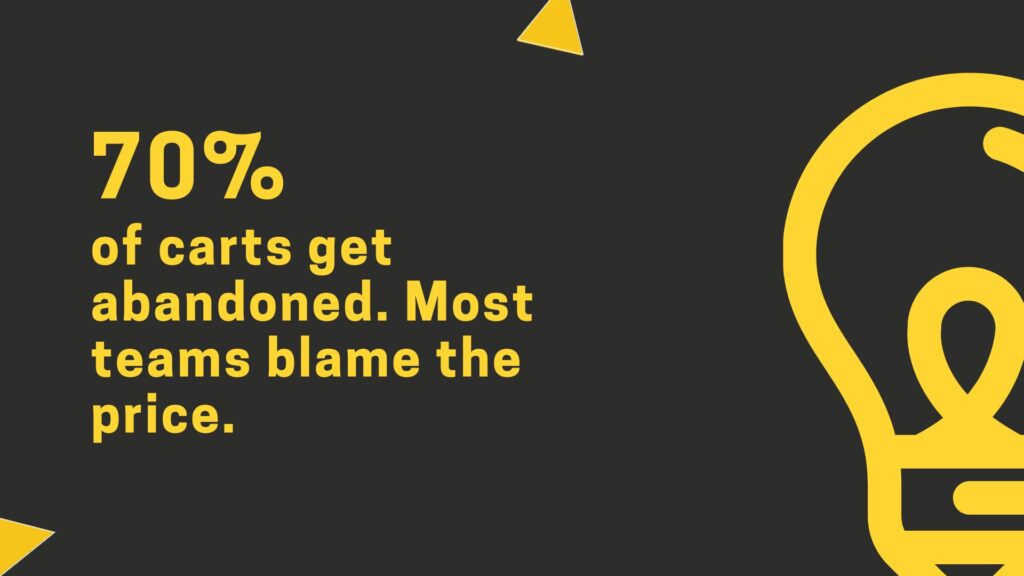
- Checkout is the biggest leak. 70.19% of carts get abandoned. Fixing usability recovers up to 35.26% of lost conversions (Baymard, 2025).
- Speed converts. A 0.1-second load improvement lifts retail conversion 8.4% (Deloitte/Google).
- Personalization pays. It drives a 5–15% revenue lift on average, up to 25% in best cases (McKinsey, 2025).
- Mobile-first is non-negotiable. Mobile carries 70–75% of traffic but converts lower, so the gap is the opportunity.
Table of Contents
- What “using UX/UI for revenue” actually means
- The business case: what the 2025–2026 data says
- Tactic 1: Reduce checkout friction
- Tactic 2: Make pages fast
- Tactic 3: Personalize the experience
- Tactic 4: Design mobile-first
- Tactic 5: Build trust into the interface
- Comparison: where top brands invest vs. where most teams spend
- A practical 6-step process
- Geographic relevance: US, UK, UAE, Australia, India
- Tools and resources
- FAQ
- Conclusion
What “using UX/UI for revenue” actually means
Short answer: It means tying every design decision to a business metric. Conversion rate, average order value, retention, or support cost. Not “does it look nice.”
I’ve spent 20+ years rebuilding interfaces for enterprise clients. The pattern repeats. Teams ship features. Nobody measures whether the interface earns or loses money.
Top brands flip that. They run a friction audit before a redesign. They define one primary metric per screen. Then they test, measure, and remove what doesn’t move the number.
UX/UI for revenue is a discipline. It requires research, testing, and the willingness to delete features instead of adding them. That last part is what most teams skip. It’s also what separates brands that grow from brands that stall.
The link between design and money is no longer a debate. The 2025–2026 data settles it. What’s left is execution.
The business case: what the 2025–2026 data says
Short answer: Design-led companies outperform. McKinsey’s five-year study found they grow revenue 32% faster and deliver 56% higher total returns to shareholders (McKinsey).
The ROI numbers are large enough to sound like marketing. They aren’t. Forrester’s modeling shows up to a 9,900% return on UX investment (Forrester, via Hallam, 2025). A well-built UI can lift conversion up to 200%. End-to-end UX work pushes that toward 400% (Forrester).
Bad UX costs the other way. Inaccessible and poorly designed sites cause a 35% drop in sales in some sectors. Across global eCommerce, broken checkout flows leave an estimated $260 billion in recoverable orders on the table (Baymard, 2025).
Here’s the part most decks skip. These gains depend on doing the unglamorous work. Audit. Test with five users. Fix the highest-impact friction first. The ROI is real, but only when the process is.
I break down the financial argument in more detail in my guide on how UX/UI design improves conversion rates.
Tactic 1: Reduce checkout friction
Short answer: Checkout is where intent dies. The average cart abandonment rate is 70.19% (Baymard, 2025). Fixing usability issues recovers up to 35.26% more conversions on large sites.
The top reason people abandon is unexpected cost. Roughly 47–48% of shoppers leave when shipping, taxes, or fees appear late (Baymard, 2025). The second reason: forced account creation, cited by about 25%.
Top brands respond with three moves. Show total cost early. Offer guest checkout. Cut form fields. Baymard’s testing shows most checkouts can reduce form elements by 20–60% without losing data they actually need.
This works, but only when you measure the right step. A “30% conversion lift” means nothing if you measured the wrong funnel stage. Define the metric first.
I cover this funnel work in detail in my breakdown of conversion rate optimization UX fixes and the broader pattern of UX design mistakes killing conversions.
[ALT: Annotated checkout flow showing where form fields and surprise fees cause abandonment]
Tactic 2: Make pages fast
Short answer: Speed is conversion. Deloitte and Google found a 0.1-second load improvement raises retail conversion 8.4% and average order value 9.2% (MonsterInsights, 2025).
The thresholds are clear. Largest Contentful Paint should land within 2.5 seconds. Yet only about 51.8% of sites meet all Core Web Vitals, and just 43.4% of mobile sites pass (DesignRush, 2025).
The cost of slowness is measured. 53% of mobile users abandon a page that takes longer than 3 seconds (Kanuka, 2025). A 1-second delay cuts conversions 7% and page views 11%.
Top brands treat speed as a product KPI, not a developer afterthought. They budget for it. T-Mobile reported a 60% increase in visit-to-order rate after focused Core Web Vitals work (Uxify).
The trade-off: chasing perfect scores past “good” gives diminishing returns. Get to the threshold, then spend your effort elsewhere. Speed compounds with good UX, which is why good UX design boosts SEO rankings too.
[ALT: Core Web Vitals dashboard showing LCP, INP, and CLS scores against Google thresholds]
Tactic 3: Personalize the experience
Short answer: Personalization lifts revenue 5–15% on average, up to 25% in strong implementations (McKinsey, via Envive, 2026). Product recommendations alone drive up to 31% of eCommerce site revenue.
The mechanism is simple. Relevant content reduces search effort. Less effort means more completed purchases. McKinsey finds fast-growing companies derive 40% more revenue from personalization than slower peers.
AI made this scalable. In 2025, 92% of businesses used AI-driven personalization in some form (Envive, 2026). And 71% of consumers now expect personalized interactions, while 76% get frustrated when they don’t get them.
But personalization breaks when it gets creepy or wrong. A bad recommendation erodes trust faster than no recommendation. Start with behavior-based suggestions. Earn the data before you use it.
This connects directly to retention, which I explore in UX design for customer retention and the wider shift in AI in UX design.
[ALT: Personalized product recommendation panel adapting to user browsing behavior]
Tactic 4: Design mobile-first
Short answer: Mobile carries 70–75% of eCommerce traffic but converts lower than desktop (Envive, 2026). That gap is the single biggest revenue opportunity for most brands.
Mobile cart abandonment runs higher than desktop, often near 80–85% (ZeroCart, 2026). Smaller screens, slower loads, and harder form entry all add interaction cost.
Top brands design for the thumb. Big tap targets. One-column forms. Autofill and digital wallets at checkout. Google’s data shows focused mobile UX work can drive conversion lifts in the high-20% range.
The mistake most teams make: they design on a 27-inch monitor and “check” mobile last. Reverse it. Design the constrained screen first. The desktop version gets easier, not harder.
I go deeper on this in my guide to mobile UX mistakes that hurt retention.
[ALT: Mobile checkout screen with large tap targets, single-column form, and wallet payment]
Tactic 5: Build trust into the interface
Short answer: Trust signals reduce hesitation at the exact moment of purchase. Security badges, clear return policies, real reviews, and transparent pricing all lift conversion.
Reviews matter more than most teams admit. 99.9% of consumers read them, and products with 11–30 reviews convert about 68% higher than products with none (Envive, 2026).
Trust also lives in the small stuff. Honest microcopy. No dark patterns. Predictable navigation. Forrester found improving UX reduces brand-switching probability by 15.8% (ux4sight, 2026).
The caveat: trust signals can’t rescue a broken product or a hidden fee. They amplify an honest experience. They can’t fake one.
For the psychology behind this, see my work on UX improvements that build customer trust.
[ALT: Product page showing review stars, security badge, and transparent total pricing]
Comparison: where top brands invest vs. where most teams spend
| Area | Top brands | Most teams |
|---|---|---|
| Primary metric | Conversion, AOV, retention | Page views, “engagement” |
| Checkout | Guest checkout, early total cost | Forced account, late fees |
| Speed | Budgeted KPI, owned by product | Developer afterthought |
| Personalization | Behavior-based, AI-scaled | Generic, one-size homepage |
| Mobile | Designed first | Checked last |
| Research | Test with 5 users before build | Ship and hope |
The difference isn’t budget. It’s sequence. Top brands research and measure before they build. Most teams build, then wonder why the numbers stayed flat.
A practical 6-step process
Short answer: Audit, prioritize by impact, test small, ship, measure, repeat. The loop matters more than any single redesign.
- Run a friction audit. Walk the funnel as a real user. Note every point of confusion or delay.
- Pick one metric per screen. Conversion on the product page. Completion on checkout. Don’t optimize everything.
- Prioritize by impact. Fix the step losing the most users first, not the easiest one.
- Test with five users. Nielsen’s classic finding still holds: five users surface most usability issues.
- Ship the smallest change that moves the metric. Avoid the full-redesign trap.
- Measure, then repeat. UX is a loop, not a launch.
This process is the backbone of my approach. I detail the audit method in mastering UX audits, a step-by-step guide.
Geographic relevance: US, UK, UAE, Australia, India
United States
US shoppers expect speed and instant payment. Average mobile load sits near 1.9 seconds (Kanuka, 2025). With mobile carrying most traffic, US brands win on one-tap wallets, fast LCP, and transparent shipping. Cart abandonment in North America runs near 69.2%. The recoverable revenue is concentrated in checkout flow and speed, where fixes are cheapest and the impact is measured directly in conversion lift.
United Kingdom
UK average mobile load is around 1.8 seconds (LinkQuest, 2025). British users are sensitive to trust and data handling, partly shaped by GDPR norms. UK brands gain from clear consent, honest microcopy, and visible security signals. Forrester’s CX work shows trust directly affects retention here. The winning pattern: fast pages, transparent pricing, and no dark patterns. These reduce the brand-switching that UK consumers do readily when an experience feels manipulative or slow.
UAE / Middle East
The UAE is mobile-dominant with high smartphone penetration and strong appetite for premium digital experiences. Bilingual (Arabic/English) interfaces and right-to-left layout support are conversion factors, not nice-to-haves. Fast mobile checkout and locally relevant payment methods drive completion. Brands serving this market should prioritize mobile-first design and culturally adapted personalization, since generic Western layouts underperform against expectations shaped by high-quality regional apps.
Australia / New Zealand
Australian shoppers skew mobile and value clarity over flash. Distance and shipping expectations make transparent delivery timelines critical at checkout. Showing total landed cost early prevents the surprise-fee abandonment that drives the 70%+ regional cart loss. ANZ brands benefit from straightforward navigation, fast pages, and honest stock and delivery information. Trust and transparency, not aggressive upsell, are the levers that move conversion in this market.
India
India’s UX market is growing fast, projected near $2.9 billion (WP Dean, 2025). The market is mobile-first and price-sensitive, with wide device and bandwidth variation. Lightweight pages, regional language support, and UPI/wallet payments drive completion. Brands that design for slower connections and budget devices capture share that heavier, desktop-led designs lose. Performance and payment flexibility matter more here than visual polish.
Tools and resources
- Baymard Institute — checkout and eCommerce usability benchmarks
- Nielsen Norman Group — evidence-based UX research and guidelines
- Google PageSpeed Insights / Core Web Vitals — speed measurement
- Figma — design, prototyping, and dev handoff
- Hotjar / heatmaps — see where users hesitate
- Interaction Design Foundation — UX methodology and learning
For how I turn audits into design systems, see my piece on building a scalable UX design system.
FAQ
How do top brands use UX/UI to increase revenue?
Top brands tie design to business metrics. They cut checkout friction, speed up pages, personalize content, and design mobile-first. McKinsey found design-led companies grow revenue 32% faster than peers. The common thread is process: research and measure before building, then remove friction at the highest-impact points rather than redesigning everything at once.
What is conversion rate optimization in UX?
Conversion rate optimization is the practice of increasing the share of visitors who complete a goal, using UX research and testing. To do it, you audit the funnel, find where users drop off, fix the highest-impact friction, and measure the result. Baymard’s 2025 data shows checkout usability fixes alone can recover up to 35.26% more conversions on large eCommerce sites.
How much does page speed affect revenue?
A great deal. To improve revenue through speed, you reduce load time toward Google’s 2.5-second LCP threshold. Deloitte and Google found a 0.1-second improvement raises retail conversion by 8.4% and average order value by 9.2%. Meanwhile, 53% of mobile users abandon pages that take over 3 seconds, so speed directly drives both bounce and conversion.
Does personalization actually increase sales?
Yes. McKinsey reports personalization drives a 5–15% revenue lift on average, reaching up to 25% in strong implementations. Product recommendations alone can account for up to 31% of eCommerce site revenue. The lift comes from reducing the effort users spend searching, which raises completion rates, provided the recommendations are relevant rather than intrusive.
What is the difference between UX and UI for revenue?
UX vs UI: the key difference is that UX is the whole journey and decision flow, while UI is the visual and interactive surface. For revenue, UX removes friction across steps, and UI reduces hesitation at the point of action. Both matter. A beautiful UI on a broken UX flow still loses money, and a clear flow with a confusing UI underperforms.
Why do most websites fail to convert?
Most sites fail because they optimize the wrong things. Teams chase traffic and engagement instead of fixing the funnel. Common killers are slow load times, hidden costs at checkout, forced account creation, and mobile experiences designed last. The fix is a friction audit followed by impact-first prioritization, not a full visual redesign.
How do I measure UX ROI?
To measure UX ROI, you connect a design change to a tracked business metric, then compare before and after. Pick one metric per screen, such as checkout completion. Run the change as a controlled test. Forrester’s modeling puts UX returns as high as 9,900%, but your real figure depends on which friction you remove and how accurately you measure the affected step.
Is mobile UX more important than desktop in 2026?
For most consumer brands, yes. Mobile carries 70–75% of eCommerce traffic but converts lower than desktop, so the gap is where revenue hides. Mobile cart abandonment runs near 80–85%. Designing mobile-first, with large tap targets, single-column forms, and wallet payments, closes that gap and lifts overall conversion more than desktop tweaks do.
Conclusion
UX/UI is a revenue system. The 2025–2026 data from Forrester, McKinsey, Baymard, and Google all point the same way. Design-led brands grow faster, retain more, and convert better.
The work is unglamorous. Audit the funnel. Fix the biggest friction first. Test with five users. Measure. Repeat. No single redesign beats a steady loop.
Every form field, every load second, every microcopy choice either earns trust or chips at it. Top brands know this and design accordingly. Most teams don’t, which is exactly why the opportunity is open.
I work with SaaS, eCommerce, and service businesses across the US, UK, UAE, Australia, and India to deliver measurable conversion lifts through UX/UI design. You can book a free UX consultation to talk through your funnel, or explore my UX/UI design services to see how the process works.
About Sanjay Dey
Sanjay Kumar Dey is a Senior UX/UI Designer and Digital Strategist with 20+ years of experience across web, mobile, and enterprise analytics dashboards. He has designed user-centric solutions for global enterprises and government initiatives, focusing on interaction design, data visualization, and scalable design systems. He writes about UX strategy, conversion optimization, and design-driven growth at sanjaydey.com, serving clients across the US, UK, UAE, Australia, and India.
Sources
- Forrester / Hallam — ROI of UX design: https://hallam.agency/blog/the-roi-of-ux-design/
- McKinsey — The Business Value of Design: https://www.mckinsey.com/capabilities/mckinsey-design/our-insights/the-business-value-of-design
- Baymard Institute — Cart Abandonment Statistics 2025: https://baymard.com/lists/cart-abandonment-rate
- MonsterInsights — Core Web Vitals 2025: https://www.monsterinsights.com/what-are-core-web-vitals/
- DesignRush — Website Speed Statistics 2025: https://www.designrush.com/agency/web-development-companies/trends/website-speed-statistics
- Kanuka Digital — Website Load Time Statistics 2025: https://www.kanukadigital.com/2025/09/website-load-time-statistics-in-2025/
- Envive — eCommerce Conversion Rate Statistics 2026: https://www.envive.ai/post/ecommerce-conversion-rate-statistics
- Envive — Personalized Marketing Impact Statistics: https://www.envive.ai/post/personalized-marketing-impact-statistics
- ZeroCart AI — Cart Abandonment Statistics 2025–2026: https://zerocartai.com/blog/cart-abandonment-statistics-2025
- ux4sight — Calculating the ROI of UX: https://ux4sight.com/blog/calculating-the-roi-of-user-experience-design
Leave a Reply